
Popular Destinations
Worth visiting
Road trip: Alexandroupoli – Evros Delta
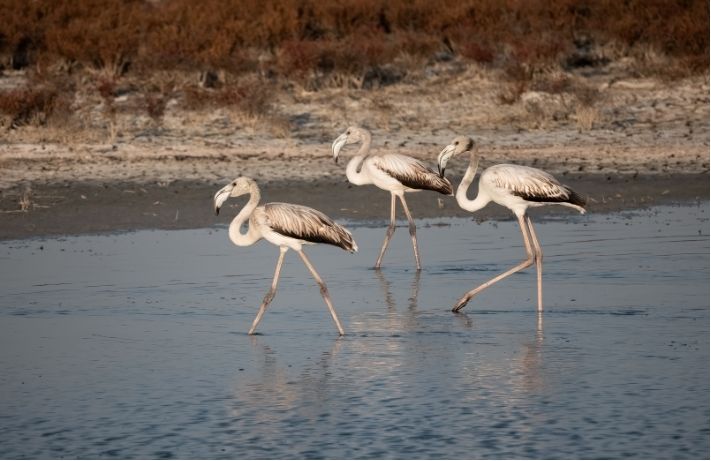
The Delta is formed at the mouth of the river Evros, hospitable to birds, animals, reptiles, fish, plants.
Its area reaches 200.000 acres, which are included in the list of protected areas of the international Ramsar Convention. Part of the Delta is designated as a Special Protection Zone and is proposed as a Site of Community Interest in the Natura 2000 network.
There are two large lagoons in the Delta. Drana with an area of 6.000 acres and Palukia with an area of 2.800 acres.
The most important value of the Evros Delta lies in its rich bird life. Already 320 species of birds have been observed out of the approximately 444 that exist in Greece! While it is the most important habitat in Greece for three species of European swans.
You can enjoy a magical boat ride in the Evros Delta, discreetly observe the presence of birds and wild animals or the fishermen fishing. It’s time to take a trip to the river – border of Greece.
Road trip: Alexandroupoli – Silk Museum
Start your road trip with a first stop at the church of Panagia Kosmosoteira in Feres. The most amazing ecclesiastical monument, together with the few ruins of the monastery of the same name. It was built in 1152 by the emperor Isaac Komnenos and is a brilliant example of a Byzantine church and of Constantinople art in general.
Continue with the next stop the petrified Lefkimmi forest. There you can visit the oldest petrified forest of our country which dates back to approximately 30.000.000 – 40.000.000 years before today and includes rare plant fossils.
The Holy Convent of Kornofolia is build at a distance of one kilometer west of the village of Kornofolia and it is dedicated to the Assumption of Virgin Mary. The local tradition places the history of the convent four centuries back.
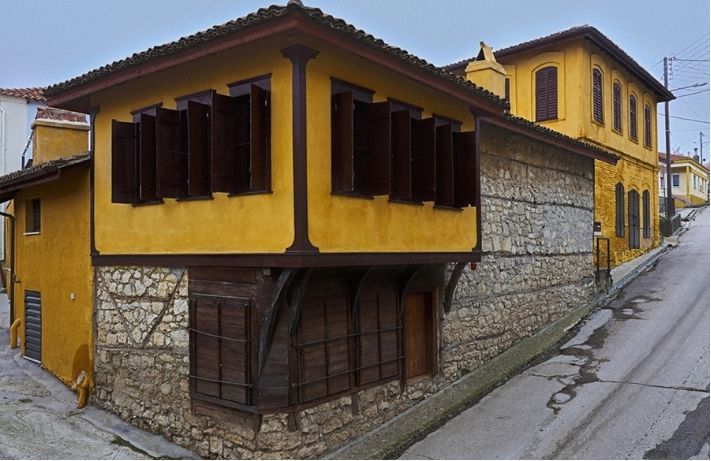
Continuing the route north of the prefecture, it is worth visiting the Silk Museum in Soufli, which is housed in a neoclassical renovated building. Its visitor can get a taste of the stages of silk production through the machines that work such as breathing, thread processing and even weaving. In the same area, a little further on, is the Gnafala Folklore Museum. The visitor can take a guided tour of the area and learn how tradition becomes an inspiration for a cottage industry that creates handicrafts inspired by our folk tradition.
Road trip: Lighthouse of Alexandroupolis – Archaeological site Mesimvria-Zoni
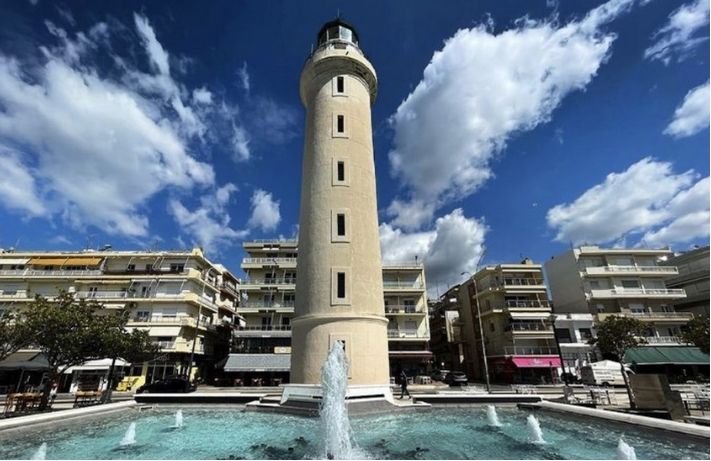
The Lighthouse of Alexandroupolis is the trademark, the symbol of the course and destination of the Municipality of Alexandroupolis. Its construction began around 1850, by the French Company of Lighthouses and Lanterns of the Mediterranean, it was inaugurated on June 1, 1880 and has been operating without interruption since then. In 2020, it closed 140 years of operation. It is 18 meters high and in order to reach the lamp chamber, at its top, one needs to climb the 98 steps with the six flat stairs, as many windows as it has to illuminate its interior. It is located west of the harbor and its light beam is visible from a distance of 24 nautical miles (about 44 km).
The cyclops cave is located above the small port of Makris, and legend says that this was the place where the one-eyed Cyclops Polyphemus, son of the god Poseidon and the nymph Thoosis, lived, who got drunk with Maronite wine served to him by Odysseus and in the end blinded by the hero. In the cave, which has two areas, you can see steps, tanks and an observatory and right next to it are the traces of a Neolithic settlement dating back to around 4.500 BC, one of the most important in the Balkans. As you visit the cave, you will enjoy the route and the view of the Thracian Sea will delight you
The Holy Monastery of Panagia belongs to the Holy Metropolis of Alexandroupolis. It is located in the seaside area of Makri and at a distance of five kilometers from it. The Holy Monastery is walled and surrounded by olive groves cultivated by the Nuns.
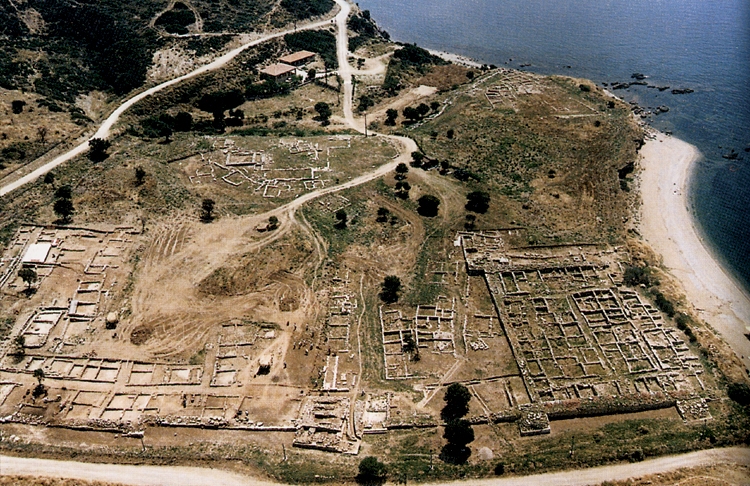
Mesimvria – Zoni is one of the colonies of Samothrace that were founded on the southeastern coast of Thrace, between Maroneia and Alexandroupoli, at the end of the 7th century BC. The double name is due to the fact that when excavations began, the site was more widely known as Mesimbria. The latest excavation data, however, lead to the conclusion that it is probably the Zone.
Excavation began in 1966 and continues to this day. The wall, reinforced with towers at intervals, has been revealed. Within the boundaries of the wall there are sets of houses, examples of the urban fabric, two public buildings, a sanctuary of Demeter and the temple of Apollo. To the west of the city and outside the wall is the cemetery.